Japanese Phoenix Tattoo: Mythology, Symbolism & Design Guide | AI Tattoo Generator – Design Your Next Tattoo with Realistic AI Previews
2026/01/08
Japanese Phoenix Tattoo: Mythology, Symbolism & Design Guide
Explore the Japanese phoenix tattoo (Hō-ō) meaning, mythology, and design styles. Learn about irezumi traditions, imperial symbolism, and how to choose your perfect Japanese phoenix tattoo.
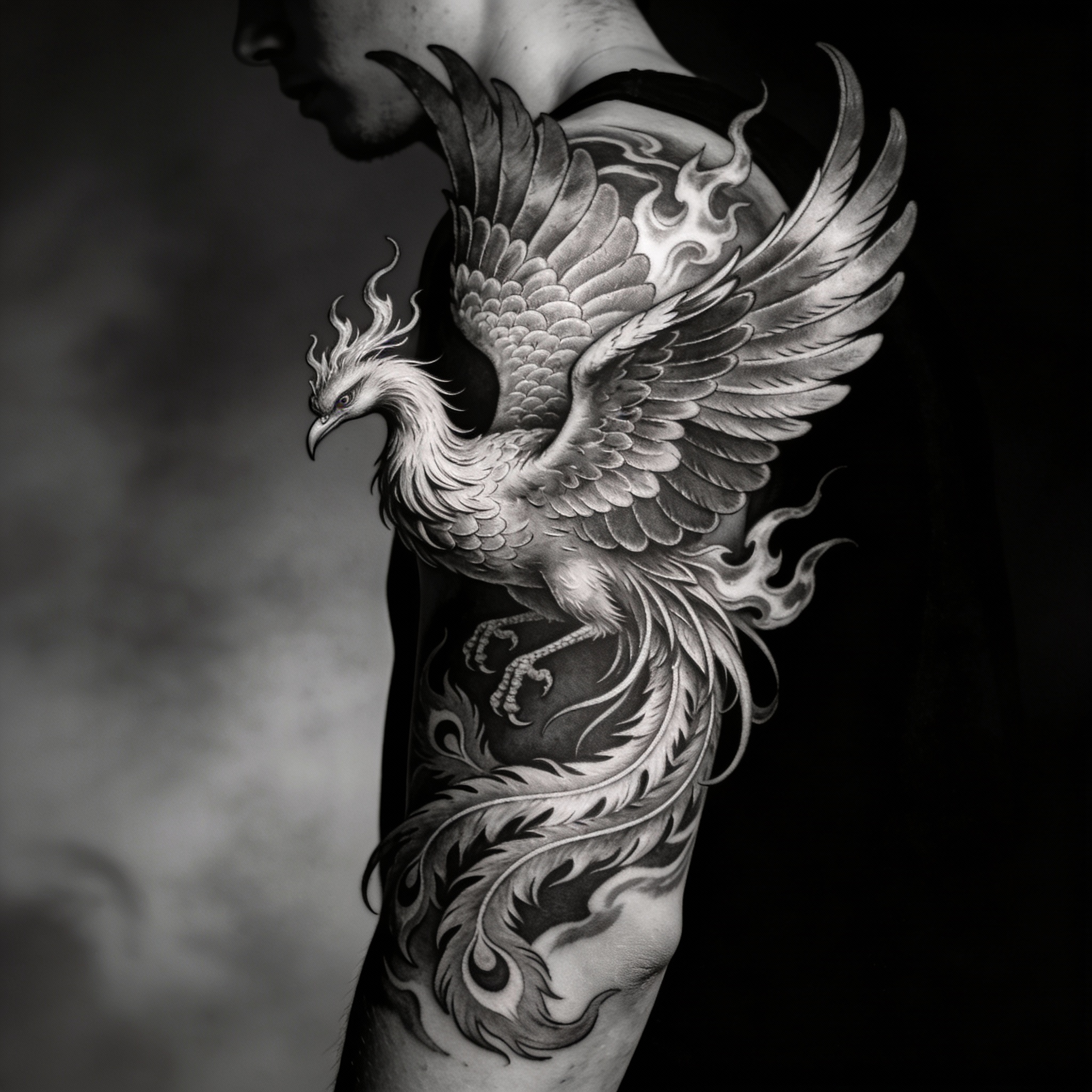
Photorealistic Hō-ō with detailed feather textures in grayscale
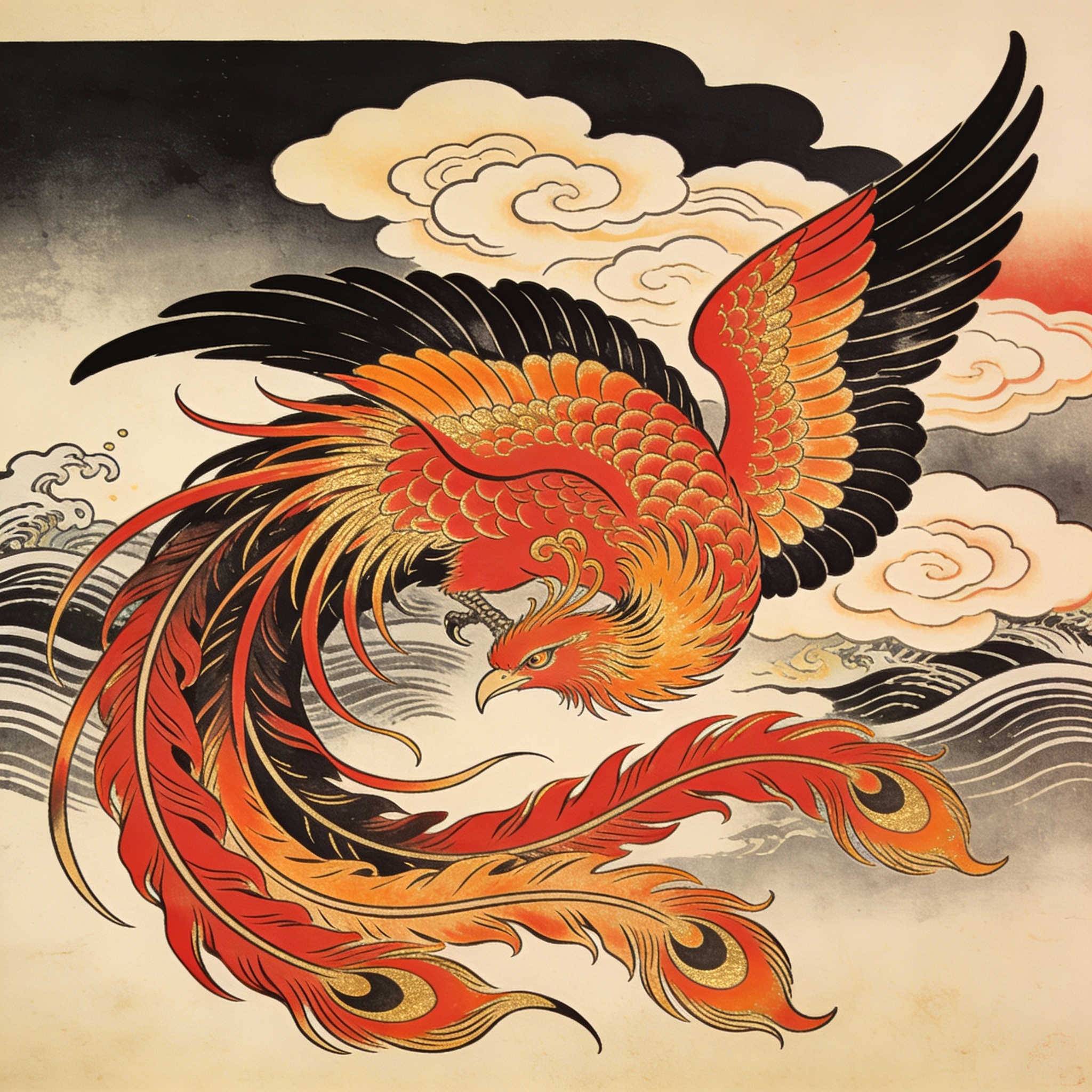
A traditional Japanese phoenix (Hō-ō) tattoo design featuring flowing tail feathers and vibrant colors
In the world of irezumi (traditional Japanese tattooing), the Japanese phoenix—called Hō-ō or Hou-ou—is a revered mythological bird. Unlike the Western phoenix that immolates itself and rises from its own ashes, the Hō-ō is a celestial creature associated with the imperial household and the coming of a new era1. A Japanese phoenix tattoo therefore carries a complex mix of cultural and personal meaning. This article draws on English-language resources—many of which discuss Japanese mythology—to explore the bird's origins, symbolic meanings and popular tattoo designs.
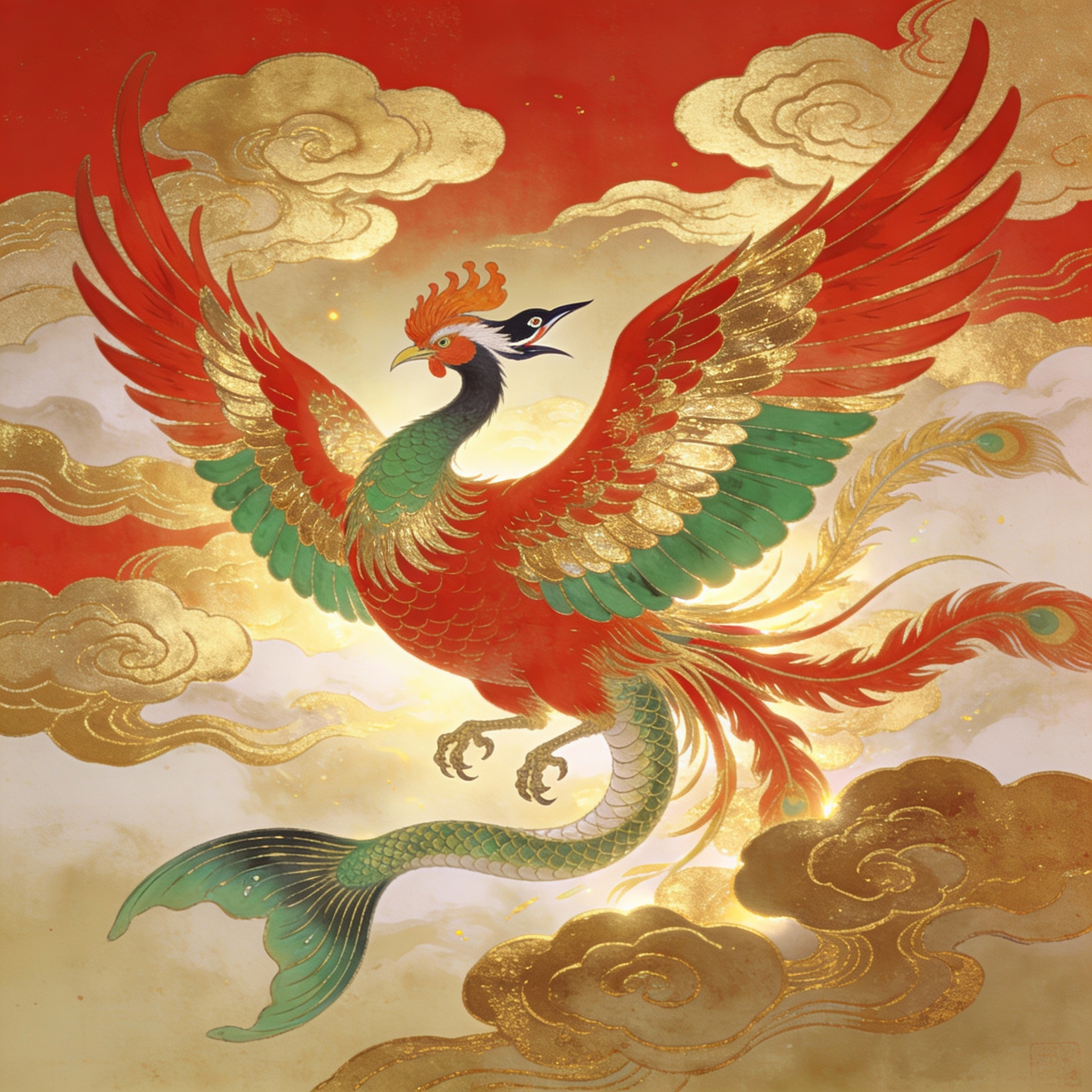
The Japanese phoenix has ancient roots in East Asian mythology. Its name combines the characters for male () and female (), reflecting a union of yin and yang. According to legend, the bird's body embodies Confucian virtues—its head represents virtue, its wings duty, its back propriety, its breast benevolence and its abdomen trust. Japanese folklore describes the phoenix with the features of several animals: a cockerel's head, a swallow's neck, a snake's body and a fish's tail, covered in brilliantly coloured feathers. It is said to descend from heaven only when a sage emperor rules, symbolising cosmic harmony.
In Japan—as in earlier Chinese tradition—the Hō-ō was adopted as a symbol of the imperial household, especially the empress2. The bird is associated with fire and the sun, justice, obedience and fidelity4. It was believed to appear at the beginning of a peaceful, prosperous era and to hide itself during times of disorder1. Consequently, it became an emblem of peace and good government. Japanese artists often pair the phoenix with a dragon—the dragon representing masculine power and the phoenix feminine grace—to signify marital harmony and the union of opposites2.
The Western phoenix, derived from Greek and Roman myth, builds a nest of aromatic woods, dies in fire and rises renewed from the ashes—a cycle of death and rebirth5. Early Christians adopted this image as a symbol of resurrection. By contrast, the Japanese Hō-ō does not die and regenerate; instead it heralds a new imperial era. While some modern tattoo enthusiasts conflate the two creatures, understanding this cultural distinction can help you choose imagery that aligns with your own story.
Because the phoenix appears only during times of peace and prosperity, it has long been regarded as an auspicious omen1. A Japanese phoenix tattoo can thus symbolise a desire for harmony, stability or a fresh beginning after a period of turmoil. Some wearers memorialise a pivotal life change—graduation, recovery or a career transition—by marking it with the arrival of this heavenly bird.
As the emblem of the imperial house, the Hō-ō embodies justice, obedience, loyalty and the ordered hierarchy of society4. Each part of its body is said to correspond to one of the five Confucian virtues3. Incorporating the phoenix into a tattoo can therefore express respect for traditional values or a connection to Japanese heritage.
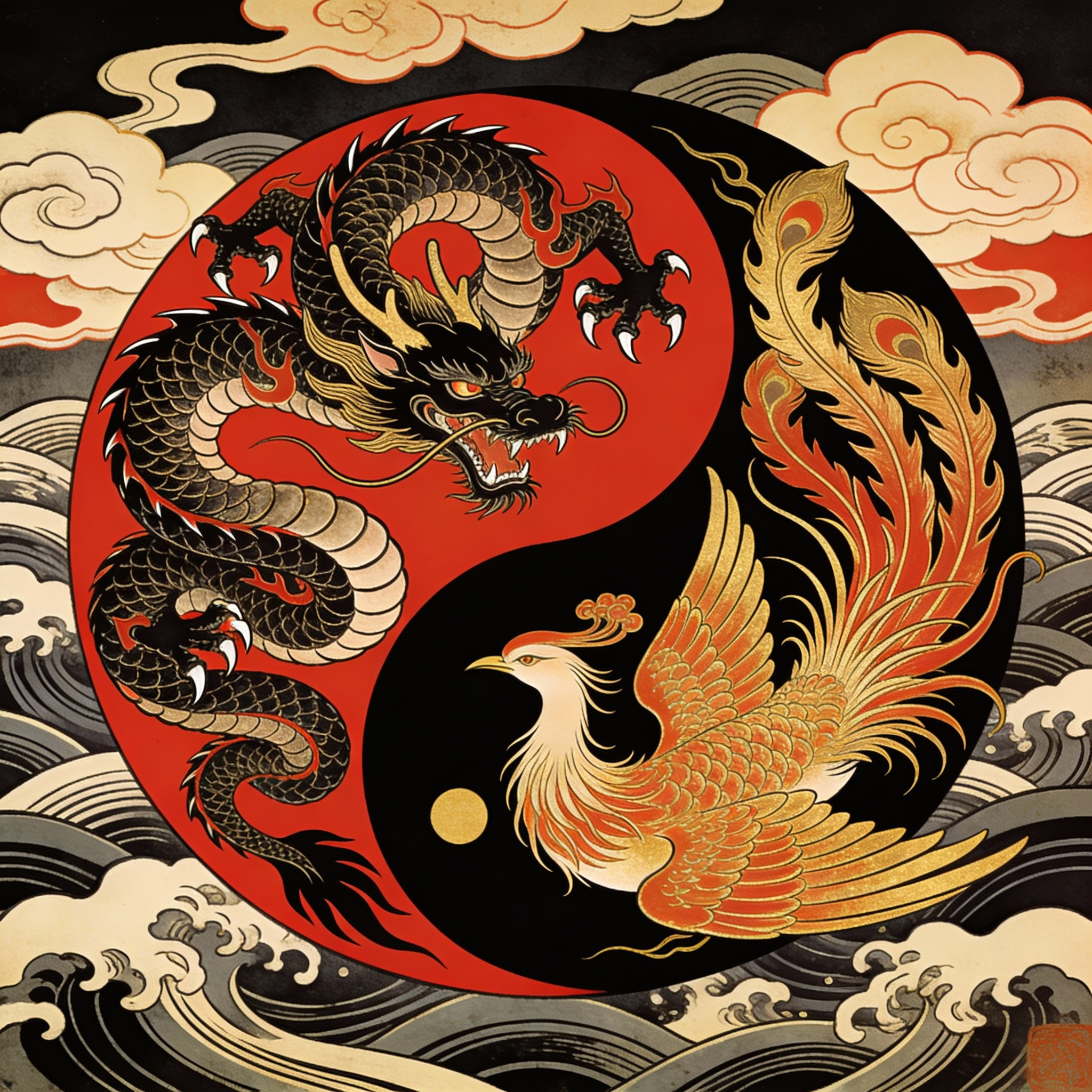
Because the phoenix unites male and female aspects and often appears with a dragon, it represents the balance of opposing forces2. Couples sometimes choose matching dragon-and-phoenix designs as a symbol of marital harmony, while individuals might use the motif to signify personal balance between strength and gentleness, or between past and future.
Dragon and phoenix design representing the balance of yin and yang
Although the Hō-ō does not burn itself like the Western phoenix, it still signals the start of a new age. In tattoo art, it is often interpreted as a symbol of transformation and resilience1. This reading echoes the general phoenix motif of rising above adversity, which is popular with people who have overcome hardship. The bird's association with fire and the sun also ties it to passion and creative energy6.
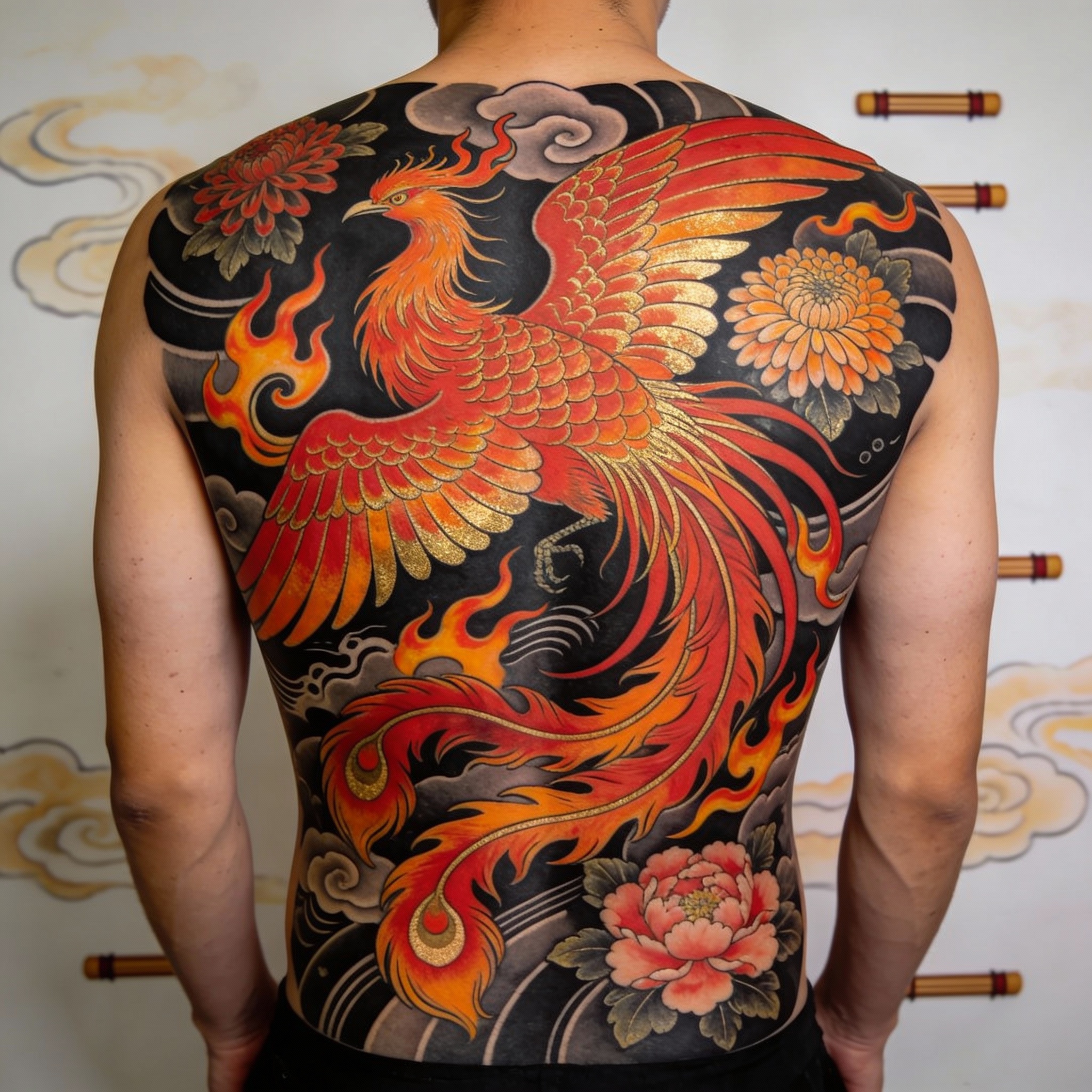
Traditional Japanese phoenix tattoos are executed in the classic irezumi style: large-scale, flowing compositions with bold black outlines and vibrant shading. Artists depict the phoenix in dynamic flight with its sweeping tail feathers and swirling flames, often set against backgrounds of clouds, waves or wind bars6. It is frequently paired with chrysanthemums, peonies or cherry blossoms to emphasise seasonal cycles and layered meanings. When combined with a dragon, the two creatures mirror yin and yang, creating a balanced back piece or full sleeve2.
Traditional irezumi style phoenix with chrysanthemums and flowing flames
Some tattoo enthusiasts prefer black-and-grey realism, focusing on anatomical details and shading rather than colour6. This style can lend the phoenix a timeless, almost sculptural quality while still conveying its ethereal grace.
Black-and-grey realism phoenix with detailed shading and sculptural quality
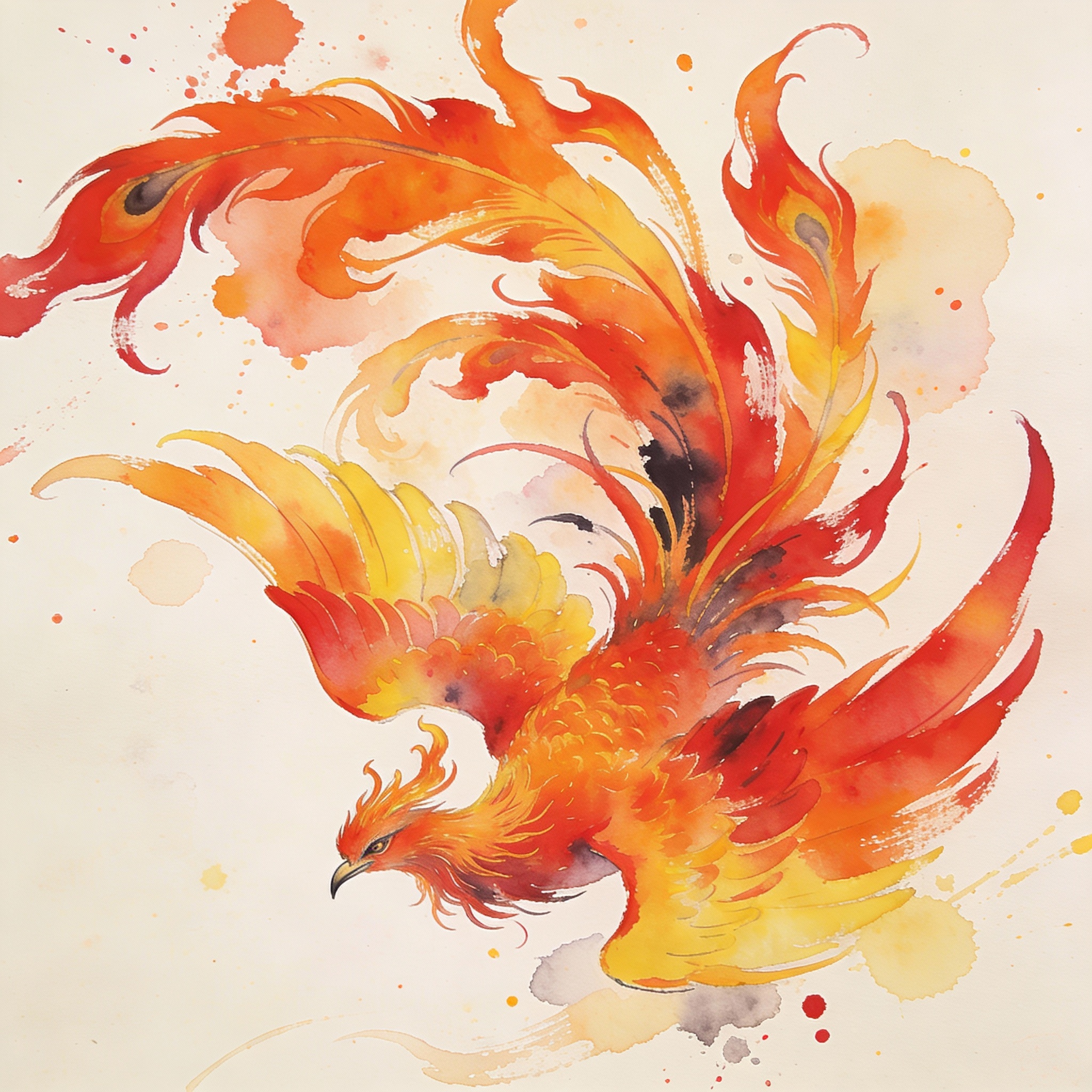
Modern tattoo styles interpret the phoenix in new ways. Watercolour tattoos use splashes of colour and painterly strokes to evoke movement and fire6. Minimalist line work reduces the bird to elegant outlines and geometric shapes, appealing to those who want a subtle yet meaningful design6.
Watercolour phoenix tattoo with painterly strokes and flowing movement
Clarify your intent: Decide what you want the phoenix to symbolise—peace, virtue, transformation or personal heritage.
Select complementary elements: Pair the phoenix with a dragon for yin-yang balance, or with flowers like peonies or cherry blossoms to add seasonal nuance2.
Plan placement and scale: Traditional phoenix designs work well on large canvases such as the back, chest or thigh to accommodate the bird's expansive wings. Smaller or minimalist versions can fit on the forearm or ankle.
Work with an experienced artist: Discuss the cultural background and your personal story with your tattooist to ensure the imagery is appropriate and meaningful. Japanese-style tattoos require particular skill in composition and shading; seek out a specialist in irezumi if you want an authentic look.
The Japanese phoenix tattoo combines mythology, imperial symbolism and personal storytelling. In Japanese lore, the Hō-ō is not a creature of self-immolation but a harbinger of peace and a repository of virtue. Incorporating this majestic bird into body art can signify harmony, duty, balance and renewal41. By understanding its origins and choosing design elements thoughtfully, you can create a tattoo that both honours Japanese tradition and reflects your unique journey.