2026/01/06
Phoenix Tattoo Meaning: Symbolism, Cultural Origins & Design Ideas
Discover the deep meaning behind phoenix tattoos. Learn what the phoenix bird symbolizes in tattoo art, from rebirth and transformation to resilience and hope.

Mythological Origins of the Phoenix
Egyptian Bennu – the Sun's Soul and the First Cry of Creation
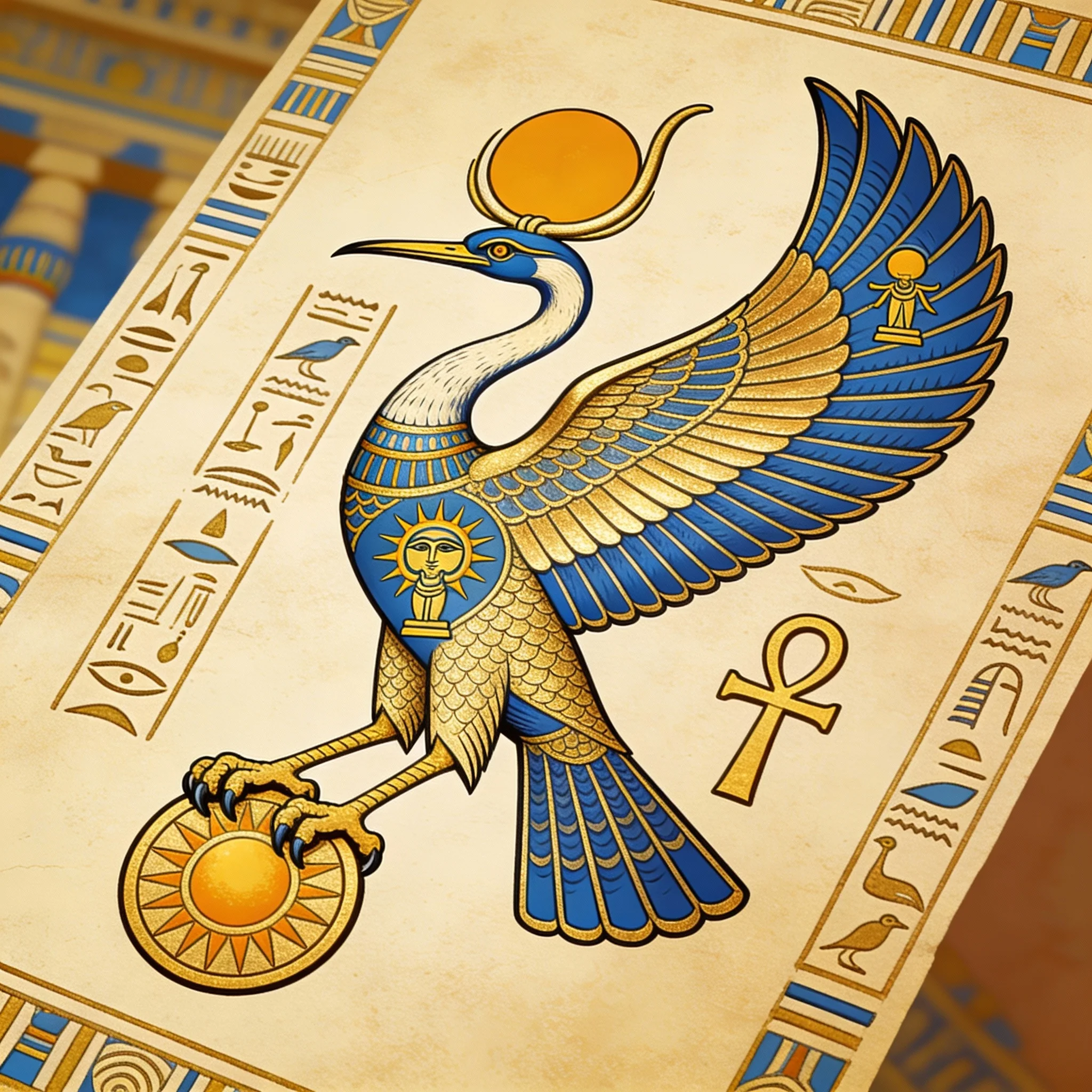
Egyptian Bennu – the sacred heron deity associated with the sun god Ra
The earliest phoenix legend likely comes from ancient Egypt. Egyptian priests told of a heron‑like deity called the Bennu, which held "a supreme place in Egyptian mythology"1. Unlike the fiery bird of later legends, the Bennu was deeply associated with the sun and the origins of life. According to Egyptian cosmology, the Bennu landed on the primordial Benben stone, let out a piercing cry and thereby marked the very beginning of creation1. Egyptians saw the Bennu as the soul (Ba) of the sun god Ra; its daily flight mirrored the sun's journey across the sky, and each morning the bird was "reborn with the sun," symbolising the eternal return of light and life1. For funerary rites the Bennu was a "potent symbol of life after death," painted on tombs to ensure the soul's rebirth1.
When Greek travellers heard this story, they adapted it into the fiery phoenix legend. In Egyptian myth the Bennu rose with the sun but did not burn itself; Greek storytellers later added the dramatic element of building a pyre, burning every 500 years and rising from the ashes1. This adaptation kept the core message of cyclical renewal and eternal return while turning the bird into a literal fire‑born creature.
Greek & Roman Phoenix – Flames, Resurrection and Immortality
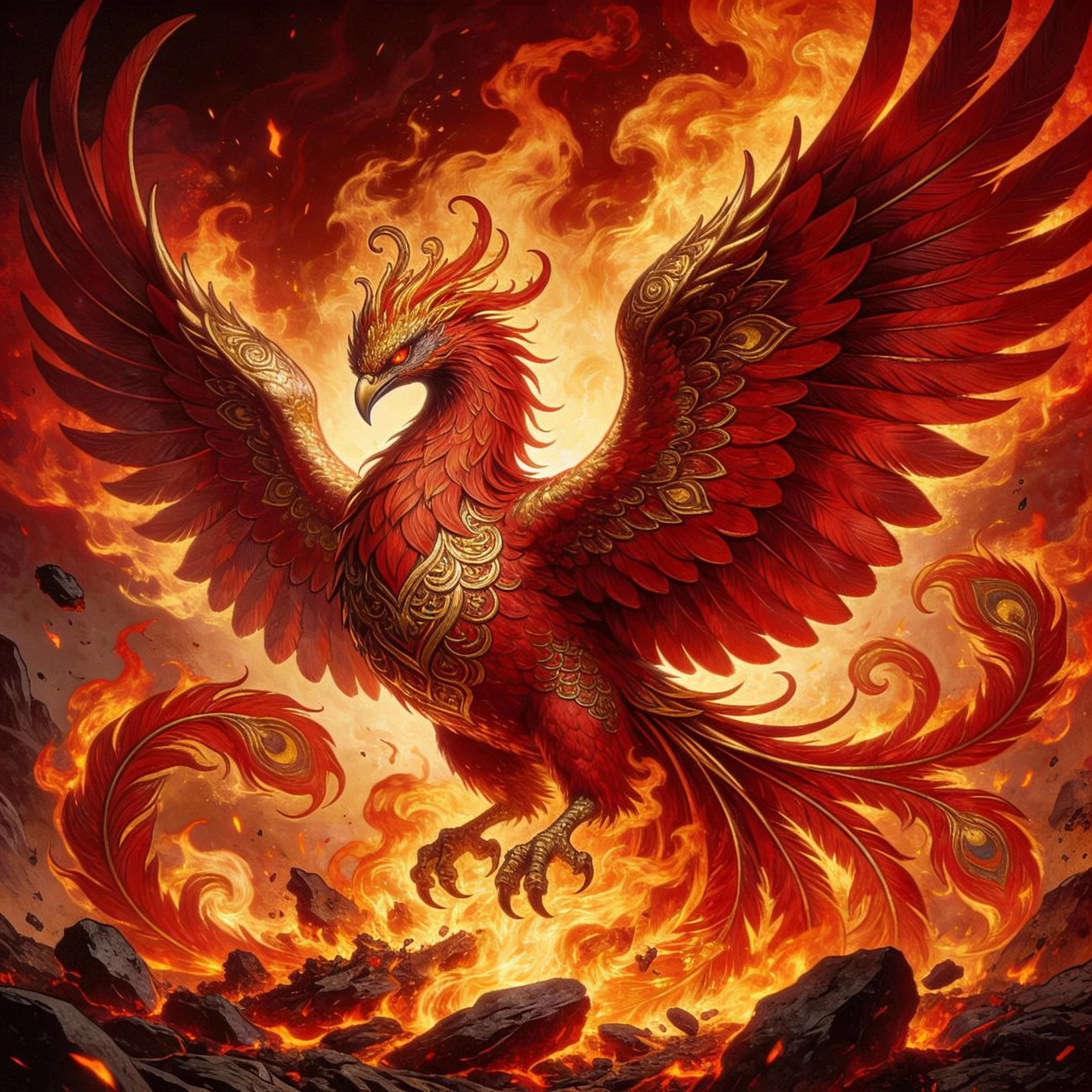
Greek Phoenix – rising from flames in a dramatic resurrection
In Greek mythology the phoenix (from the Greek phoînix, meaning "crimson/purple") was described as a magnificent bird with radiant plumage. Greek accounts say it lived for centuries before building a nest of aromatic woods, igniting it and being consumed by the flames; from its ashes emerged a new phoenix2. This tale emphasises immortality and resurrection—themes that made the phoenix an enduring symbol of the sun, time and consecration2. Herodotus wrote that the bird burned itself then flew to Heliopolis to deposit its predecessor's ashes on the altar of the sun god2. Because the phoenix could regenerate, it was later adopted by early Christians as an allegory for Christ's resurrection2.
Chinese Fenghuang – Virtue, Grace and Harmonious Balance
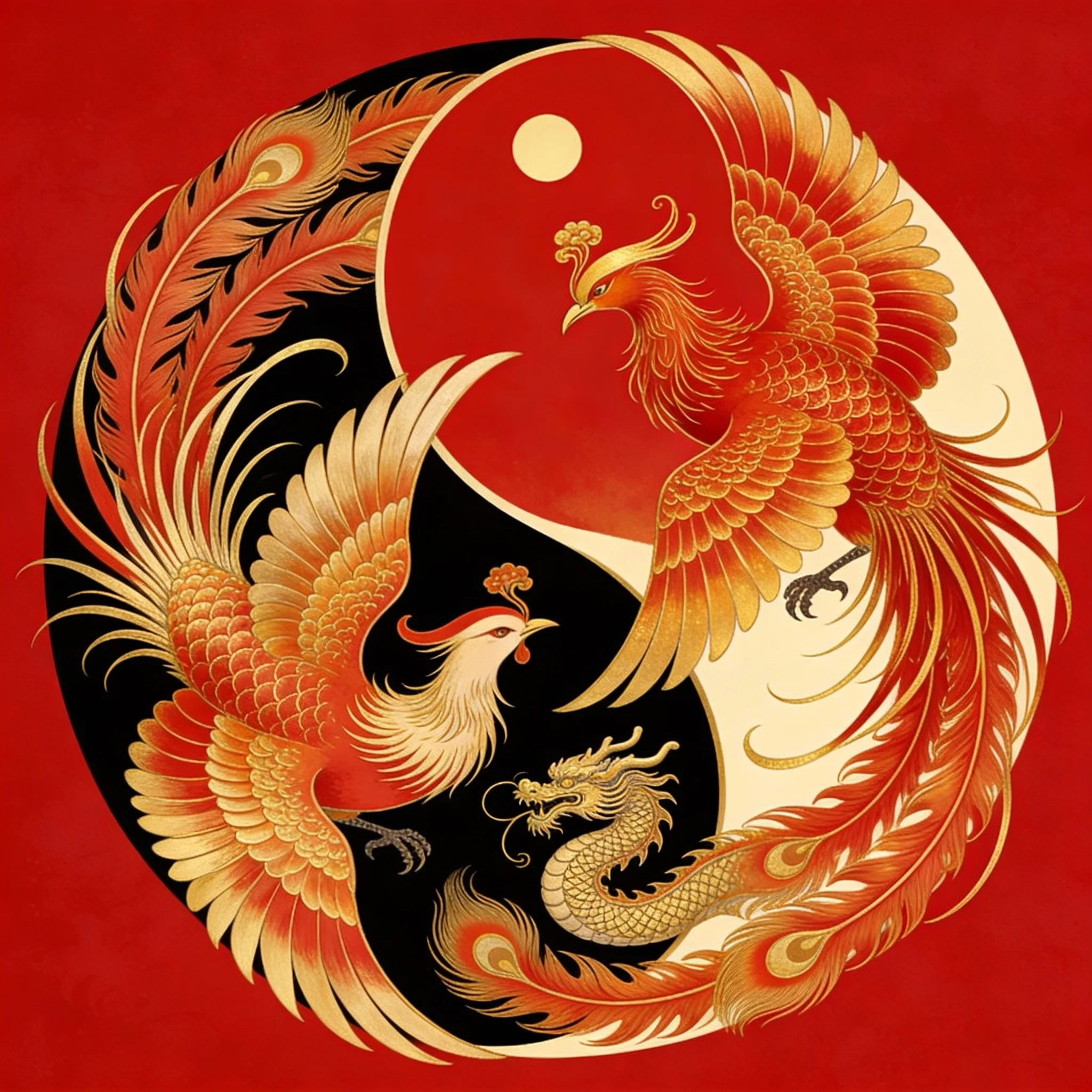
Chinese Fenghuang – representing yin and yang harmony
China has its own phoenix: the Fenghuang (also spelled feng huang), often referred to as the "Chinese phoenix." Early Chinese texts describe it as two birds—Feng (male) and Huang (female)—representing yin and yang3. Together they became a single creature symbolising harmony and the union of masculine and feminine forces. In Chinese mythology the Fenghuang accompanied other mythical animals (dragon, qilin and tortoise) to help Pan Gu create the universe3. Each part of its body embodied a Confucian virtue: the head represents virtue, the back propriety, the wings duty, the chest mercy and the abdomen credibility4.
The Fenghuang is also an auspicious omen. Classical sources say it appears during times of peace and prosperity and goes into hiding during rough times; its appearance signals "the start of a new, prosperous era"3. Traditionally, male and female phoenixes were depicted together with dragons to symbolise marital harmony4. Chinese art often uses the dragon‑and‑phoenix motif to represent wedded bliss and the harmonious balance between yin (huang) and yang (feng)4.
Japanese Hō‑ō – Imperial Emblem and Herald of a New Era
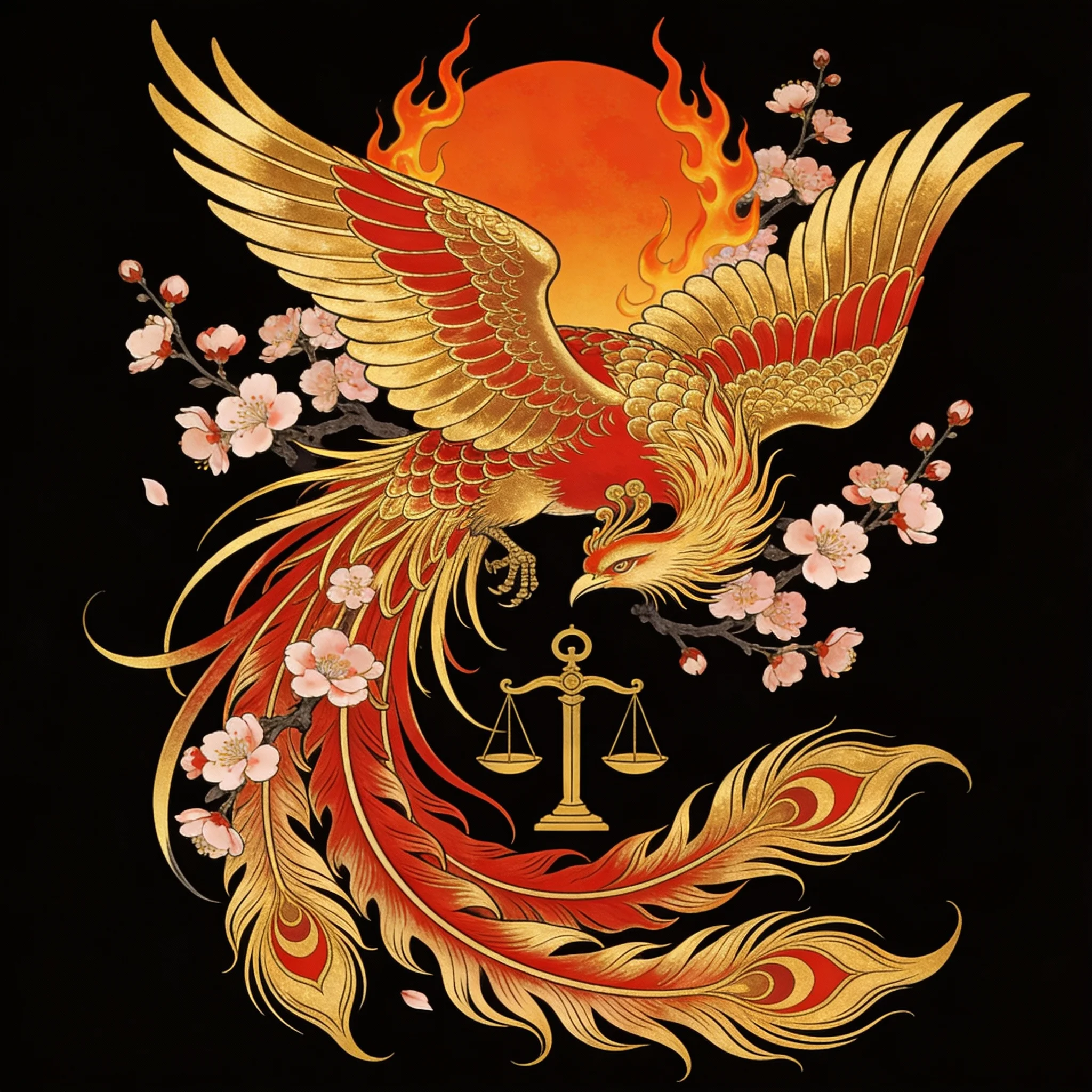
Japanese Hō‑ō – the imperial phoenix in traditional irezumi style
When the Chinese phoenix legend reached Japan, it evolved into the Hō‑ō (also written Hou‑ou or Ho‑o). In Japanese lore, Feng represents the male phoenix (yang/solar) and Huang the female (yin/lunar)5. The Hō‑ō is deeply associated with the imperial household; it represents fire, the sun, justice, obedience and fidelity5 and often adorns palaces, shrines and the Empress's regalia. According to legend, the bird appears rarely—only to herald the birth of a virtuous ruler or during times of peace and prosperity5. When trouble arises, it hides itself, making it simultaneously a symbol of peace when visible and disharmony when absent5. The Hō‑ō is frequently paired with the dragon in Japanese art, conveying both conflict and conjugal bliss5.
Korean Jujak – The Red Phoenix of the South
In Korean tradition the phoenix is known as Jujak or the Red Phoenix. Although similar in appearance to the Fenghuang, the Jujak belongs to a different mythological system: it is one of the Four Symbols of the Chinese constellations. The Vermilion Bird (Zhūquè) represents the fire element, the direction south and the season of summer and is "described as a red bird…perpetually covered in flames"6. Korean culture adopted this red phoenix as an emblem of royalty; the creature appeared in royal seals and symbolised grace, virtue and wisdom of the female sovereign7. Like its Chinese and Japanese counterparts, it is viewed as an auspicious symbol of harmony and prosperous rule.
Core Meanings of Phoenix Tattoos
Thanks to these layered myths, the phoenix tattoo carries a remarkable range of symbolic meanings. Understanding these themes will help you create a design that speaks directly to your personal journey.
Rebirth & Renewal
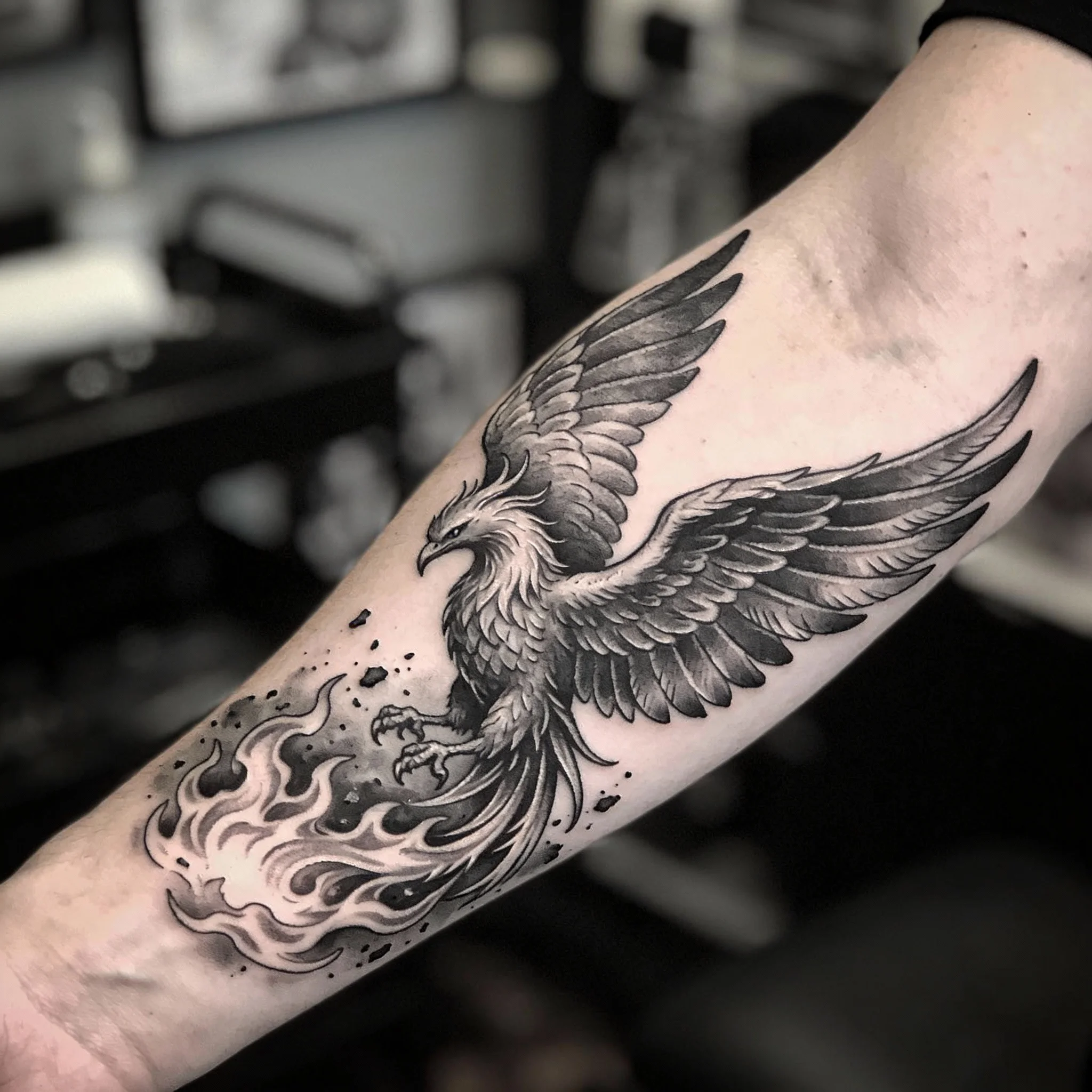
Phoenix rebirth tattoo – symbolizing transformation and rising from ashes
The phoenix's most famous trait is its ability to rise from its own ashes. Greek legends emphasise the bird burning on its pyre and being reborn, while Egyptian tales highlight its daily rebirth with the sunrise12. In tattoo art this translates to the idea of starting over after hardship. HowStuffWorks notes that the phoenix's cyclical nature makes it "a symbol of rebirth, a fresh start and the opportunity to emerge from the ashes of past struggles or life‑altering events"7. People who have endured addiction, trauma or major life changes often choose a phoenix tattoo to mark their personal transformation8.
Resilience & Strength
The phoenix is not only reborn—it actively chooses to rise again. HowStuffWorks explains that the bird's determination to return after being consumed by flames has made it a symbol of resilience and inner strength7. A phoenix tattoo can serve as a daily reminder that no matter how intense the "fires" of life, you have the strength to overcome them. Holistic Ink echoes this sentiment, noting that many clients select the design after "overcoming personal struggles," such as the end of a relationship or the loss of a loved one, to celebrate their ability to rise stronger than before8.
Transformation & Personal Growth
Because the phoenix repeatedly destroys itself and is reborn anew, it represents profound transformation. HowStuffWorks describes this symbolism as embodying the "journey of self‑discovery, shedding old identities and emerging renewed"7. A phoenix tattoo can honour pivotal moments such as career changes, spiritual awakenings or embracing one's true self. The bird's imagery—wings spread, feathers aflame—captures the dynamic energy of growth and evolution8.
Immortality & Eternal Life
Many cultures viewed the phoenix as a messenger between the mortal world and eternity. The Egyptian Bennu's daily cycle affirmed that life and light return eternally1, while early Christians adopted the phoenix as a symbol of Christ's resurrection and the promise of eternal life2. Holistic Ink highlights that the phoenix's ability to resurrect itself from ashes makes it a tattoo that "resonates with people on a spiritual and philosophical level," reminding them that death is merely a transition and that "the soul never truly fades away"8.
Hope, Passion & Creativity
The phoenix is inherently a bird of fire and the sun. In Chinese myth it represents the south and summer6, and Japanese sources link it to the sun and justice5. Artists and writers often see the phoenix as a muse; HowStuffWorks notes that its "fiery nature and association with the sun" imbue it with meanings related to passion, creativity and inspiration7. For creatives, the tattoo can symbolise the burning spark of imagination and the courage to continually reinvent one's work.
Duality & Balance
The phoenix doesn't merely destroy—it also harmonises opposites. The Chinese Fenghuang was originally two birds representing yin and yang3, and Japanese sources emphasise its male (feng) and female (huang) aspects5. HowStuffWorks notes that some traditions see the phoenix as a symbol of balancing life and death, light and dark or masculine and feminine energies7. Paired with a dragon or lotus, the phoenix can represent complementary forces—strength paired with grace or chaos paired with order.
Cultural Identity & Heritage
Because the phoenix appears in myths across the world, many people use the tattoo to honour their ancestral roots. HowStuffWorks explains that Egyptians view the Bennu as a tangible link to their heritage7, while Chinese and Japanese wearers may choose the phoenix to represent Confucian virtues or imperial history45. Koreans might choose the Jujak to celebrate royal heritage or the southern guardian7. Similarly, the phoenix appears in Persian (Simorgh), Russian (Firebird) and Native American (Thunderbird) legends, offering diverse cultural associations for tattoo enthusiasts.
Popular Phoenix Tattoo Styles
Modern tattoo artists interpret the phoenix in countless ways. Your design can emphasise specific meanings or simply reflect your aesthetic tastes.
Traditional Japanese Phoenix Tattoos
Japanese phoenix tattoos, inspired by Hō‑ō imagery, are typically large, colourful and highly detailed. HowStuffWorks notes that traditional Japanese designs often showcase flowing feathers and coiled, flame‑like bodies, and they're frequently paired with dragons, cherry blossoms or waves7. These pieces celebrate the bird's imperial origins and dramatic presence.
Black & Grey Realism
For a more subdued look, some choose black‑and‑grey realism. This style uses intricate shading and anatomical details to create a lifelike phoenix. HowStuffWorks points out that the monochromatic palette can lend solemnity and gravitas to the design7, underscoring themes of endurance and inner strength.
Tribal & Geometric Designs
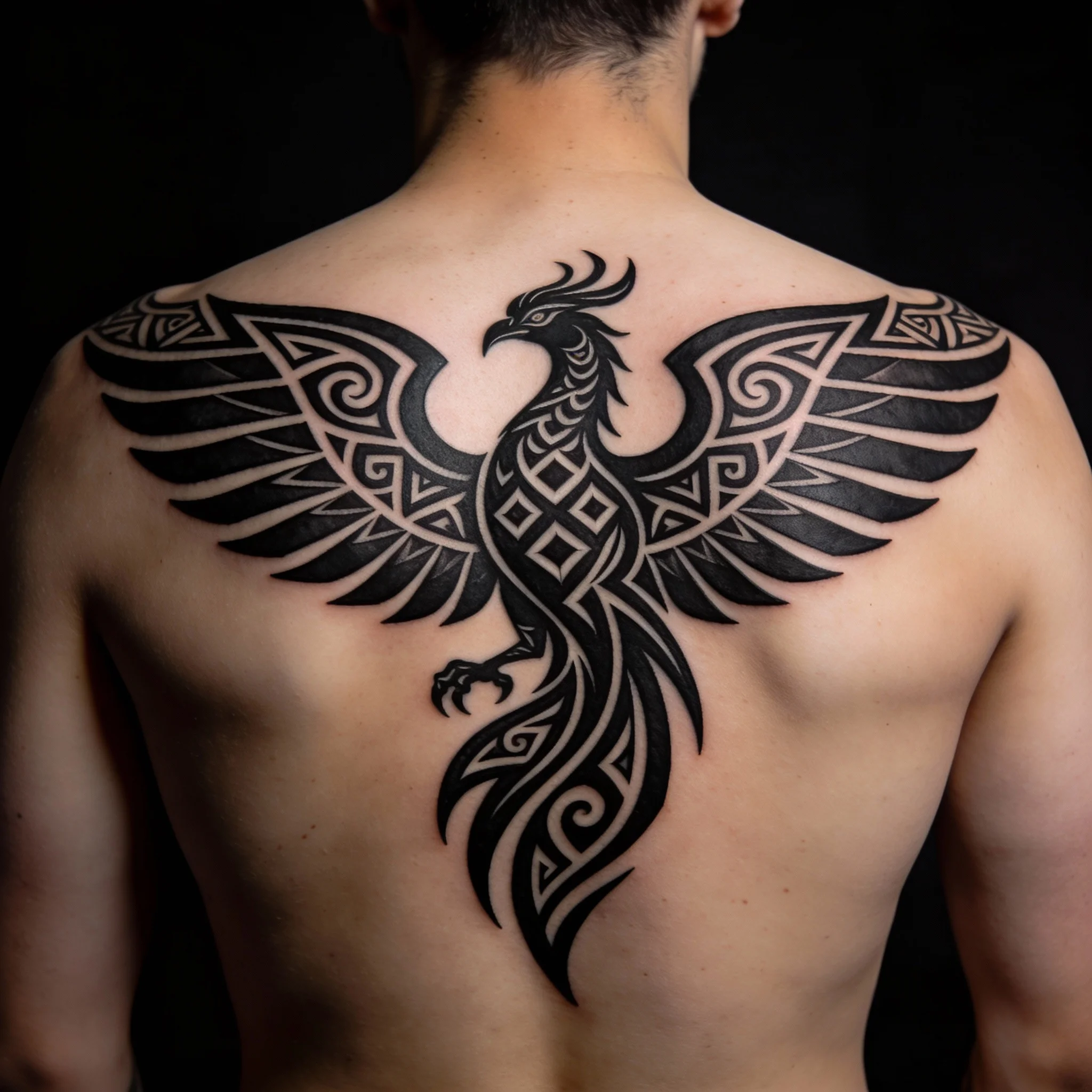
Tribal phoenix tattoo – bold geometric patterns inspired by Polynesian art
Tribal phoenix tattoos draw from indigenous motifs and bold geometric shapes. These designs may incorporate patterns from Pacific or Native American art, connecting the mythical bird to one's cultural heritage7. Some wearers blend the phoenix with abstract geometric patterns, emphasising balance between chaos (the bird's flames) and order (geometric shapes)8.
Watercolour & Minimalist Tattoos
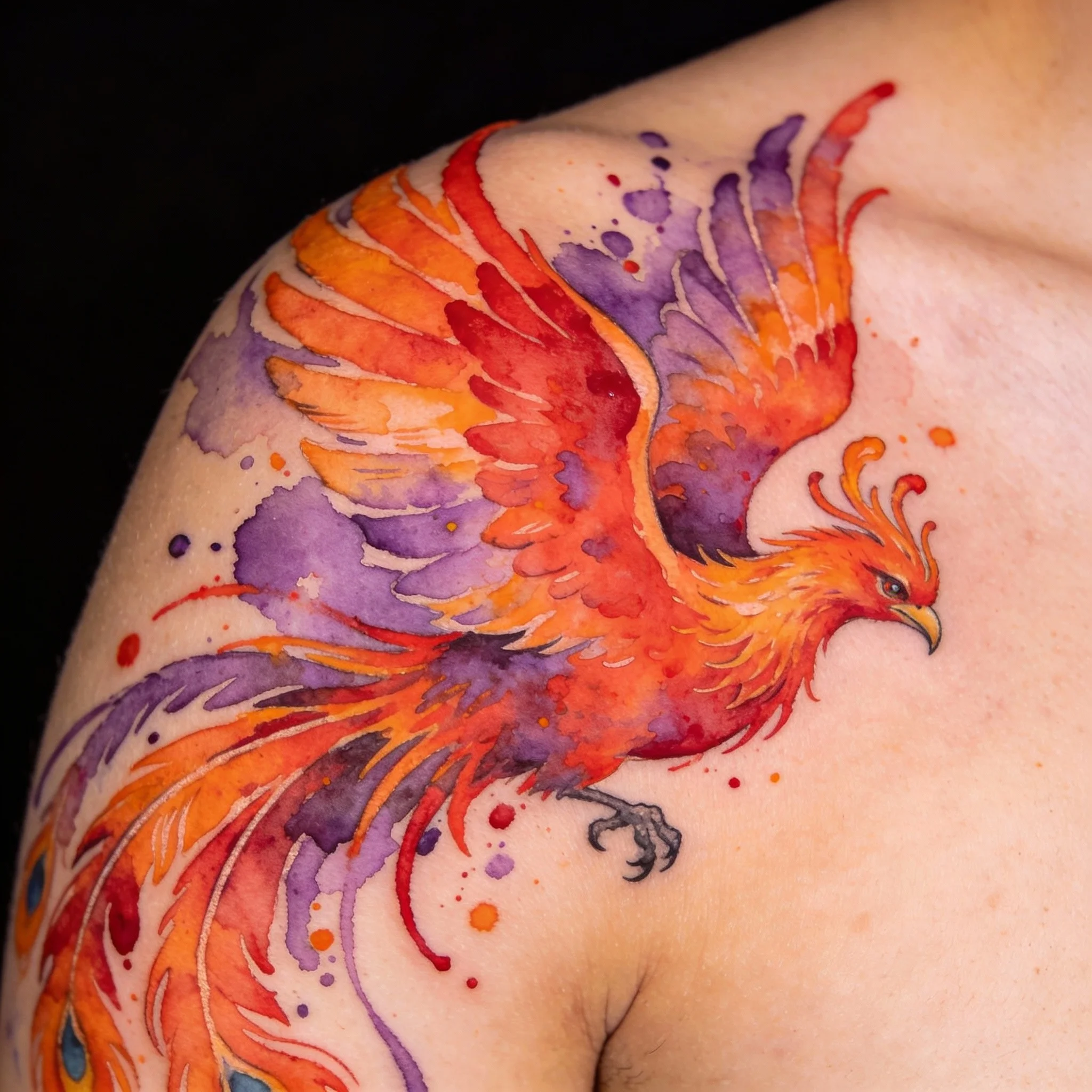
Watercolour phoenix – vibrant splashes of color
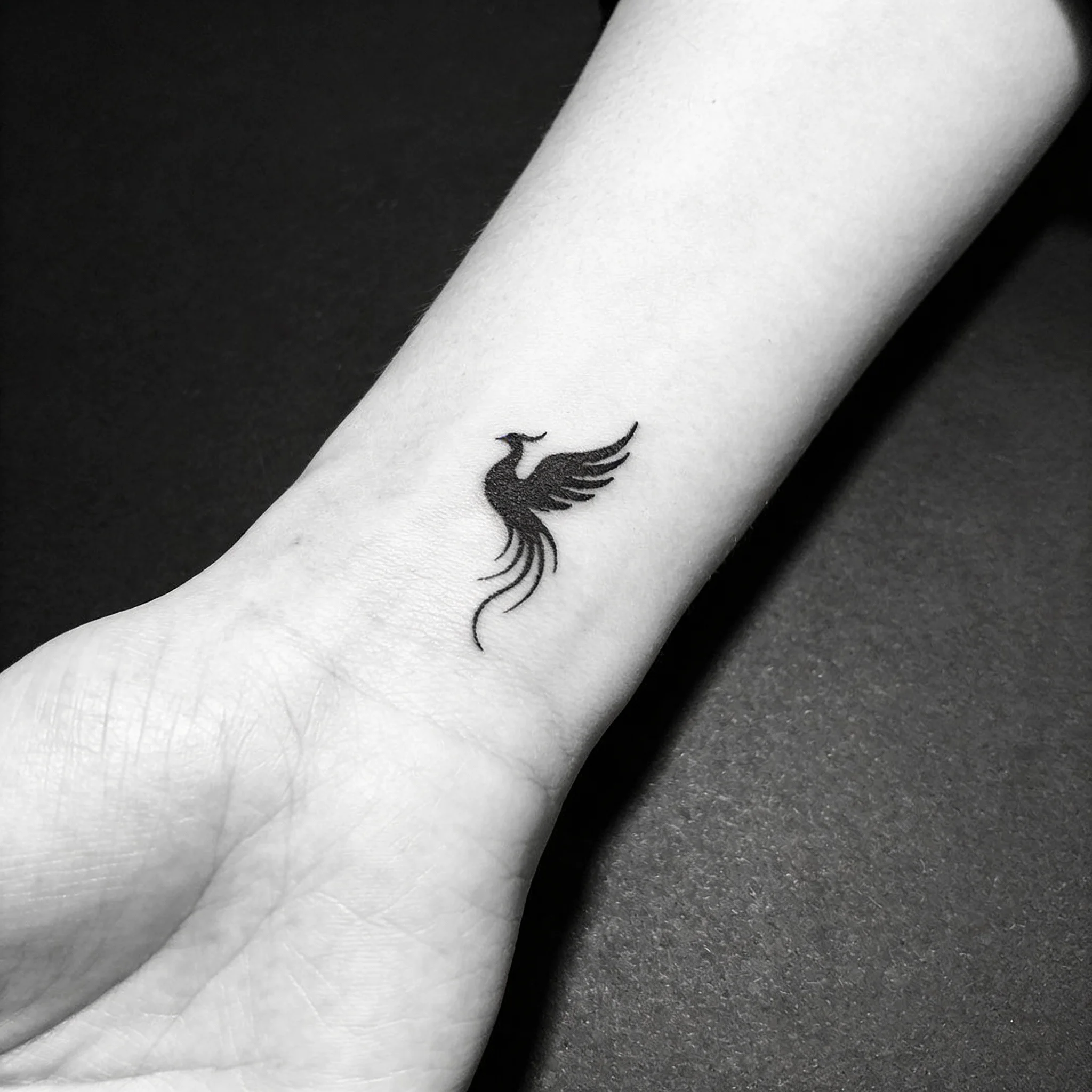
Minimalist phoenix – delicate fine line work
Watercolour phoenix tattoos leverage splashes of vibrant colour and loose, painterly strokes to convey fluidity and motion7. Conversely, minimalist or line‑work tattoos use clean lines and simplified silhouettes to express the phoenix's essence without elaborate detail7. These understated designs can be particularly personal and subtle.
Combining the Phoenix with Other Symbols
To add layers of meaning, many people combine the phoenix with complementary motifs. Holistic Ink suggests pairing the bird with a lotus flower to unite themes of rebirth and spiritual awakening8. Abstract geometric shapes can symbolise structure and balance, while elements like clocks or compasses highlight life's journey8. The phoenix can also be integrated into memorial tattoos to honour loved ones or mark significant milestones7.
Choosing Your Phoenix Tattoo
When planning a phoenix tattoo, consider both the story you want to tell and the style that resonates with you. Think about whether you relate more to the Bennu's promise of daily renewal, the Greek phoenix's dramatic resurrection, the Fenghuang's balance of yin and yang or the Hō‑ō's imperial grace. Reflect on personal experiences of adversity, transformation or new beginnings—moments when you rose from your own ashes.
Colour and placement can also influence meaning. Warm colours (reds, oranges and golds) underscore the bird's connection to fire and passion, while cooler palettes can evoke serenity or mourning. A large back piece allows for sweeping wings and intricate detail, whereas a small wrist or ankle tattoo offers a discreet reminder of resilience.
Final Thoughts
A phoenix tattoo is more than just a beautiful design. Across cultures it symbolises rebirth, resilience, transformation and hope. Whether you connect with the Egyptian Bennu's creation story, the Greek phoenix's fiery resurrection, the Chinese Fenghuang's harmony of yin and yang, the Japanese Hō‑ō's imperial elegance or the Korean Jujak's royal guardianship, this mythical bird invites you to celebrate your own ability to rise from the ashes. Choose imagery and symbols that reflect your journey, and let your phoenix tattoo be a timeless reminder that every ending contains the seeds of a new beginning.
Explore More Phoenix Tattoo Ideas
Looking for design inspiration? Our comprehensive guide covers phoenix rising tattoos, Japanese irezumi, small minimalist designs, black phoenix tattoos, back pieces, and dragon-phoenix combinations.
Continue reading: Phoenix Tattoo Designs & Ideas
References
Footnotes
Categories
Mythological Origins of the PhoenixEgyptian Bennu – the Sun's Soul and the First Cry of CreationGreek & Roman Phoenix – Flames, Resurrection and ImmortalityChinese Fenghuang – Virtue, Grace and Harmonious BalanceJapanese Hō‑ō – Imperial Emblem and Herald of a New EraKorean Jujak – The Red Phoenix of the SouthCore Meanings of Phoenix TattoosRebirth & RenewalResilience & StrengthTransformation & Personal GrowthImmortality & Eternal LifeHope, Passion & CreativityDuality & BalanceCultural Identity & HeritagePopular Phoenix Tattoo StylesTraditional Japanese Phoenix TattoosBlack & Grey RealismTribal & Geometric DesignsWatercolour & Minimalist TattoosCombining the Phoenix with Other SymbolsChoosing Your Phoenix TattooFinal ThoughtsExplore More Phoenix Tattoo IdeasReferencesFootnotes
More Posts
Newsletter
Join the community
Subscribe to our newsletter for the latest news and updates


